
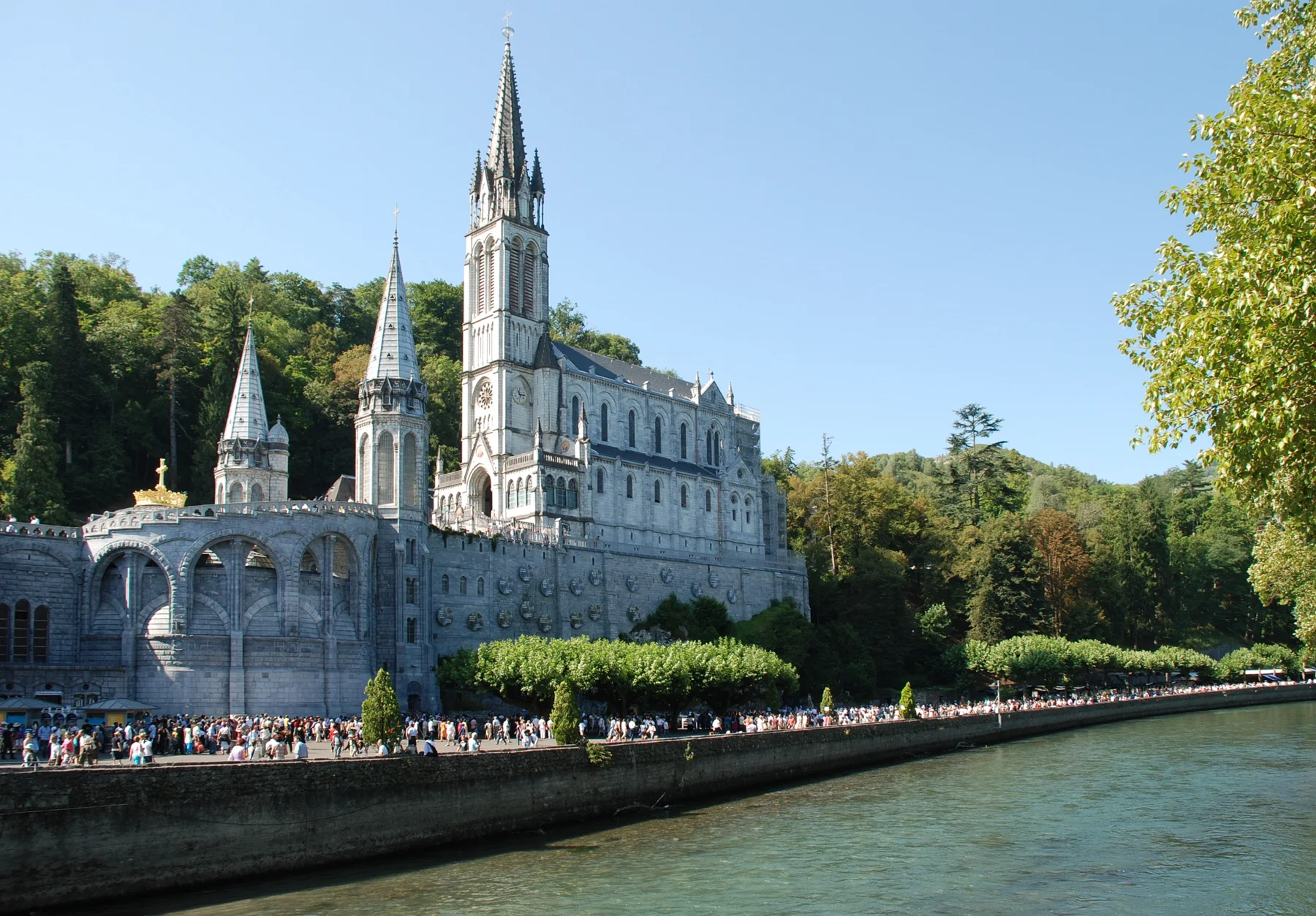
Between February 11 and July 16, 1858, Bernadette Soubirous, a fourteen-year-old who could not yet read, reported eighteen apparitions of a lady at the grotto of Massabielle beside the river Gave in Lourdes. On February 25 she scraped at the earth of the grotto and a spring appeared; on March 25 the lady gave her name as the Immaculate Conception, a dogma proclaimed by Pius IX four years earlier. The bishop of Tarbes recognized the apparitions in 1862.
The sanctuary grew around the grotto: the crypt and the Upper Basilica on the rock above it, the Rosary Basilica below, and in 1958 the underground Basilica of St. Pius X for 25,000 people. The Medical Bureau, founded in 1883, examines claimed cures; the Church has recognized seventy as miraculous. Thousands of volunteers, the hospitaliers, bring the sick to the grotto and the baths each season.
Pilgrims drink from the spring and wash at the taps, take part in the afternoon Eucharistic procession and the evening torchlight procession, and return to the grotto when it is quiet. Nobody is promised a cure. St. John Paul II visited twice; in 1992 he made February 11 the World Day of the Sick.