The Church teaches that in the Mass the bread and wine become the Body and Blood of Christ, and that he remains present in the consecrated host kept in the tabernacle. Daily Mass is written into every Bold Pilgrim itinerary for that reason, not as a formality: it is the one thing a pilgrim can do in Rome that is exactly what he does at home.
A handful of places in Italy keep what the Church recognizes as Eucharistic miracles. At Lanciano, in Abruzzo, flesh and blood from a consecration in the eighth century are displayed in the church of San Francesco. At Orvieto the cathedral holds the corporal stained with blood at Bolsena in 1263, the event that led Urban IV to extend the feast of Corpus Christi to the whole Church the following year. St. Carlo Acutis catalogued these and more than a hundred others in the exhibition now shown in Assisi.
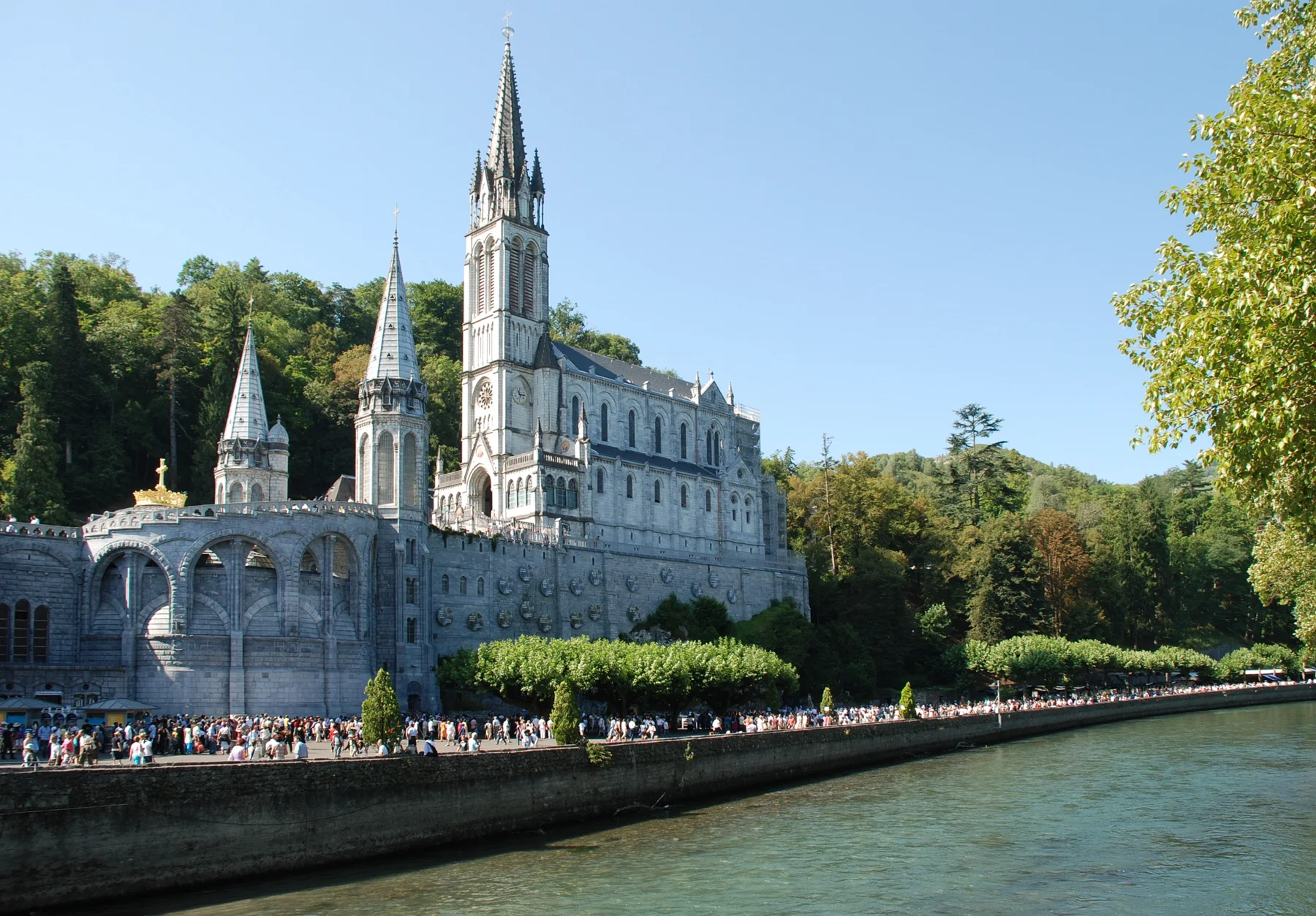
At Lourdes the afternoon Eucharistic procession and blessing of the sick is the sanctuary's daily centre of gravity; at Fátima the Chapel of Perpetual Adoration is open through the night. St. John Paul II's last encyclical, Ecclesia de Eucharistia, opens with the words 'The Church draws her life from the Eucharist.'