
James and his brother John were mending nets with their father Zebedee when Jesus called them. With Peter they witnessed the raising of Jairus's daughter, the Transfiguration and the agony in Gethsemane. Around the year 44 King Herod Agrippa had him put to the sword in Jerusalem, as the Acts of the Apostles records; he is the only Apostle whose death the New Testament describes.
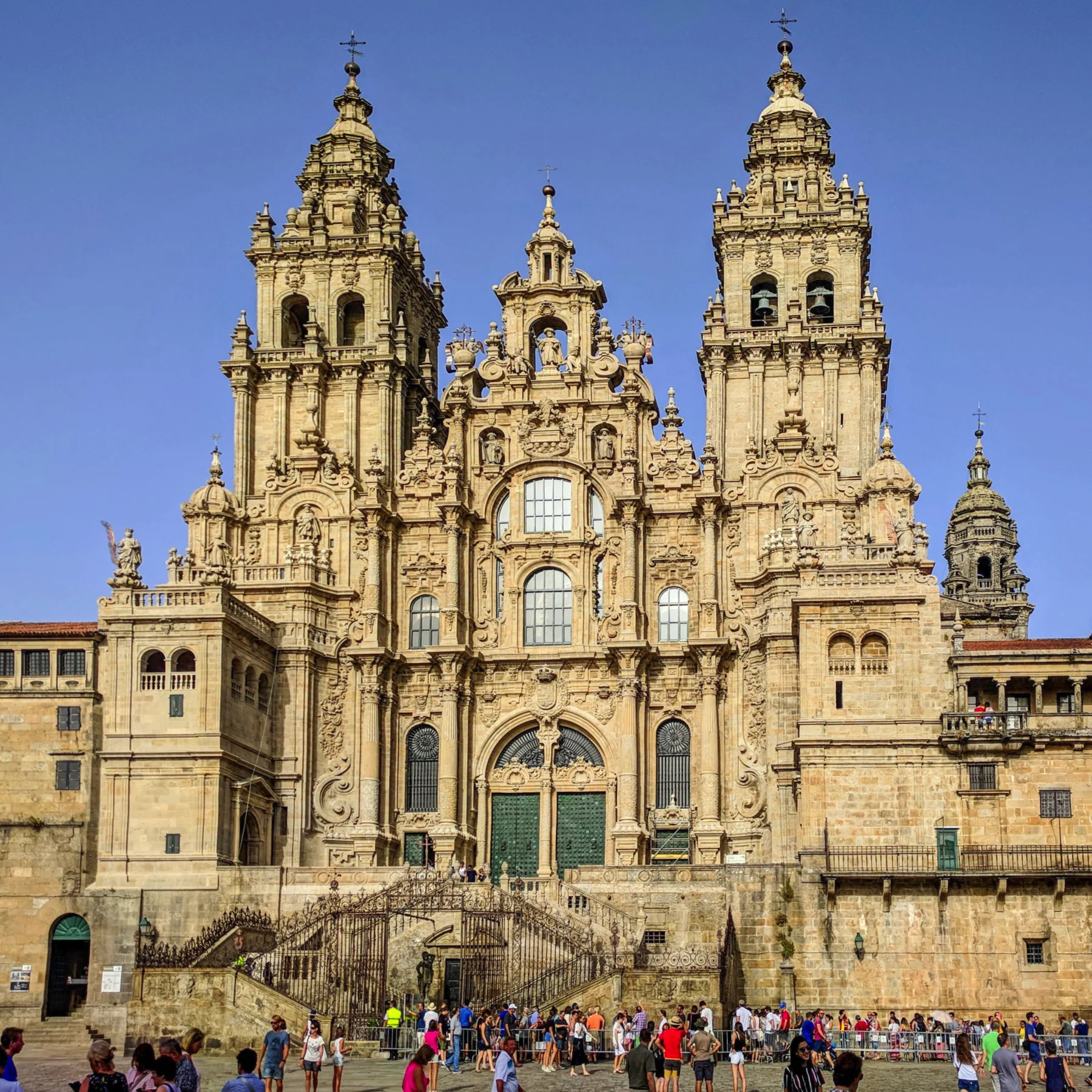
Tradition holds that his disciples carried his body by sea to Galicia, in the far north-west of Spain, and that the tomb was rediscovered in the early ninth century. A church was raised over it, the present cathedral was begun in 1075 and consecrated in 1211, and the roads that converged on it, the Camino de Santiago, became one of the three great pilgrimages of medieval Christendom with Rome and Jerusalem.
The relics lie in a silver casket in the crypt beneath the high altar; pilgrims climb behind the altar to embrace the statue of the Apostle above. When July 25 falls on a Sunday the cathedral keeps a Holy Year and opens its Holy Door; the next is 2027.