
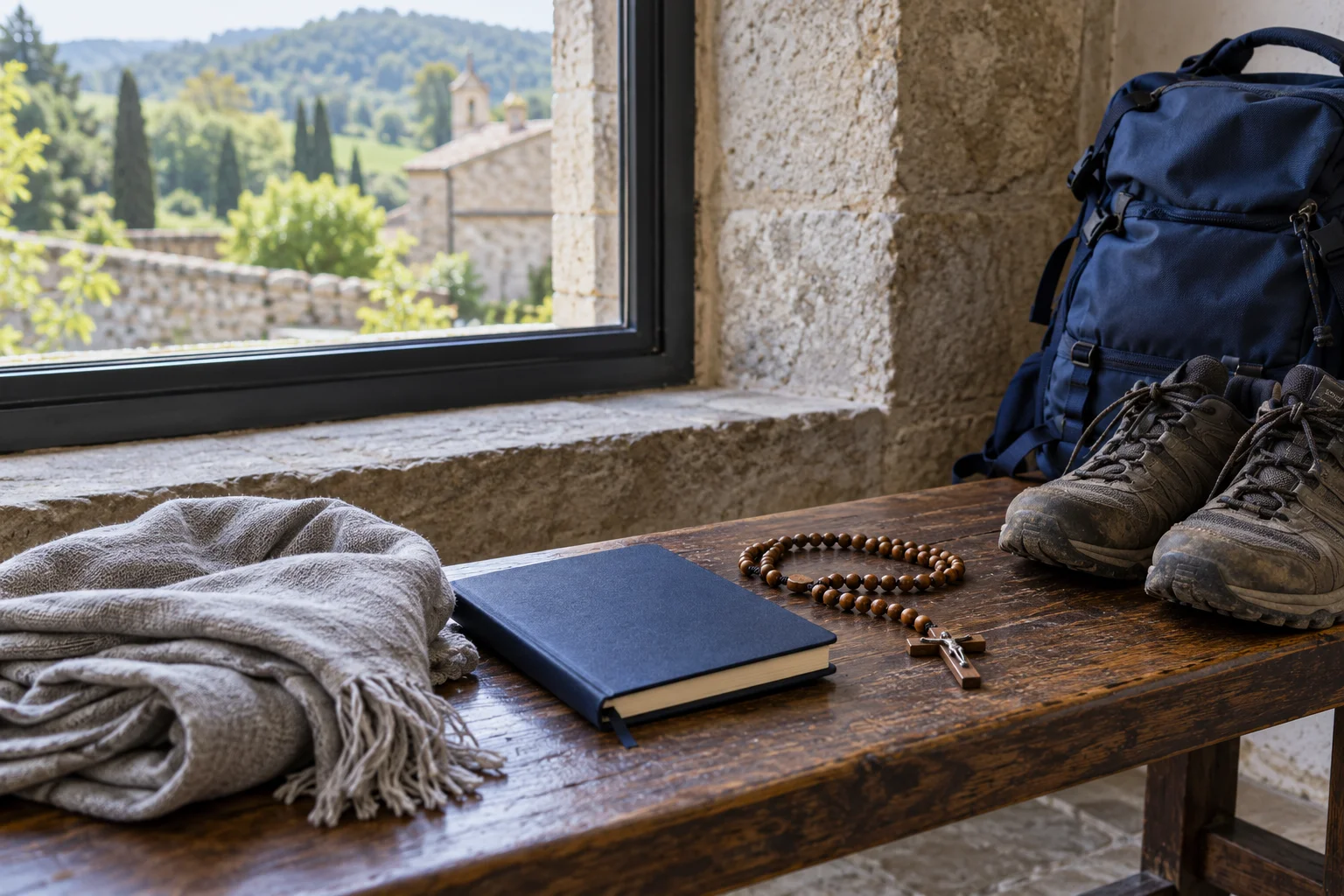
Ask about the full walking day
Distance is only one measure. Uneven paving, stairs, long security lines, standing during explanations, and the walk back from dinner can add up. Ask for the longest walking stretch without a break and the practical alternative if you cannot join it. A coach cannot always stop at the church door: in Assisi the historic center is closed to private vehicles, coaches park at the lower lots, and the main basilica stands at about 400 m elevation on steep lanes. The Vatican Museums route to the Sistine Chapel is roughly 2–3 hours on foot, and the dome of St. Peter's involves 320 steps even after the elevator.
Check the room and the transfer
Confirm elevator access from the entrance to the room, bathroom features that matter to you, vehicle steps, and luggage help. A hotel category or star rating does not answer these questions. Explain the assistance you need before booking and ask for written confirmation of arrangements. Lourdes is the most consistently accessible major shrine: the sanctuary is level, organized around assisted pilgrims, and its daily processions (5:00 p.m. and 9:00 p.m. in season) accommodate wheelchairs.
Protect rest and independence
Look for fewer hotel changes and identifiable periods to rest. A base of two or three nights at one shrine, as at Lourdes, Fátima, or Assisi, is easier than a new hotel every night. Understand how optional activities work and whether anyone remains available when part of the group goes out: at Medjugorje, Apparition Hill is a 20–40 minute rocky climb and Cross Mountain a 1.5–2.5 hour round trip, and neither is required for the parish program. Discuss personal health and travel readiness with your clinician. The goal is a journey you can participate in with confidence and dignity.
How much free time should a pilgrimage include?
Enough to support rest, personal prayer, and a sustainable pace: for most groups, a useful planning rule is at least one unscheduled half-day for every two or three full touring days, plus a daily gap of an hour or more. A retreat-style shrine stay and a multi-city journey will differ. At Lourdes and Medjugorje the fixed events are in the late afternoon and evening (Lourdes processions at about 5:00 p.m. and 9:00 p.m.; the Medjugorje evening program from 6:00 p.m. in summer), which leaves mornings or early afternoons open. Look for identifiable free periods in the itinerary rather than a vague promise of "leisure time."
Ask whether optional excursions consume the advertised free time. You should be able to understand what happens if you choose to rest instead of joining an extra activity.
How can I avoid an overly rushed pilgrimage?
Limit hotel changes to one every three nights, inspect transfer times, and look for genuine rest periods in the daily itinerary. Ask how long the group spends at each major site: the standard Vatican Museums route to the Sistine Chapel alone takes 2–3 hours, a guided Auschwitz-Birkenau visit 3.5 hours, and Rome groups typically walk 8–12 km a day. Operators label 5–8 km a day “moderate,” and many pilgrimage days exceed it.
Be willing to leave out a destination. Adding a famous shrine can make the entire journey less workable when it introduces another flight or a long road transfer. Ask whether optional excursions occupy all remaining free time.