
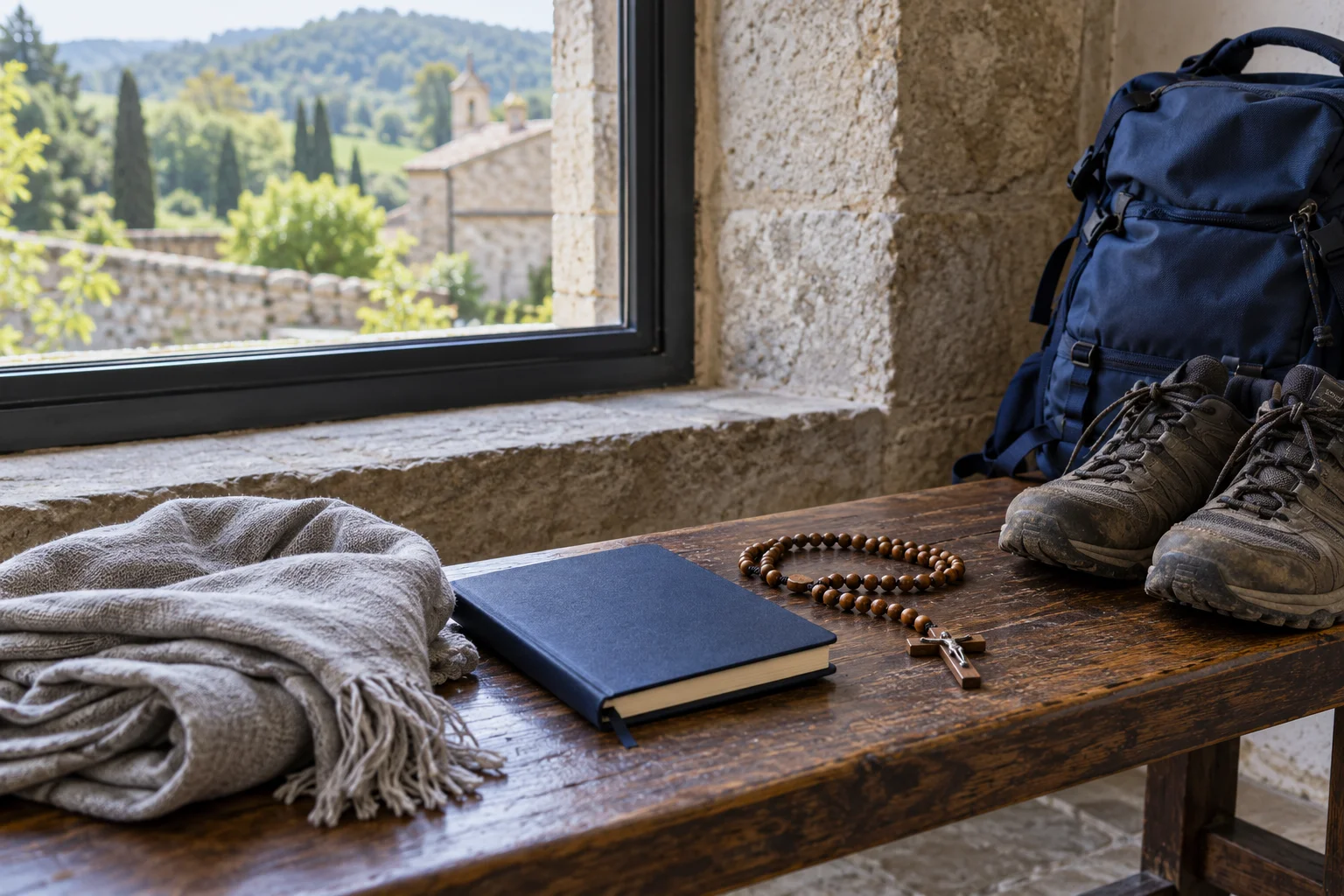
Italy is the strictest in practice because the checks happen at a security line. The St. Peter's rule above is enforced by staff before you reach the basilica, and the Vatican Museums apply the same standard for the Sistine Chapel, so a scarf in a bag will not always rescue a sleeveless top on a hot day. The existing page on what to wear at the Vatican has the detail. Other Italian basilicas, including Assisi, follow the same shoulders-and-knees rule with less uniform enforcement.
In the Holy Land the Custody of the Holy Land, which cares for the Catholic sanctuaries, applies the shoulders-and-knees standard at the Holy Sepulchre, Nazareth, and Bethlehem; the rule is not published on a page that could be opened for this article, so confirm with the guide. Women do not cover their heads in the Catholic sites. At the Western Wall, which is a Jewish holy site, men cover their heads (paper kippot are provided), men and women pray in separate sections, and on the Sabbath photography and phones are not used; the Western Wall Heritage Foundation's site does not publish a written dress rule, so follow the guide.
Lourdes and Medjugorje are less formal. The Sanctuary of Lourdes' site does not state a dress code; sensible shoes, a rain layer, and modest clothing for Mass and the baths are what matter. Medjugorje's hills call for closed shoes with grip. Evening processions in both places are outdoors and cool after dark.