
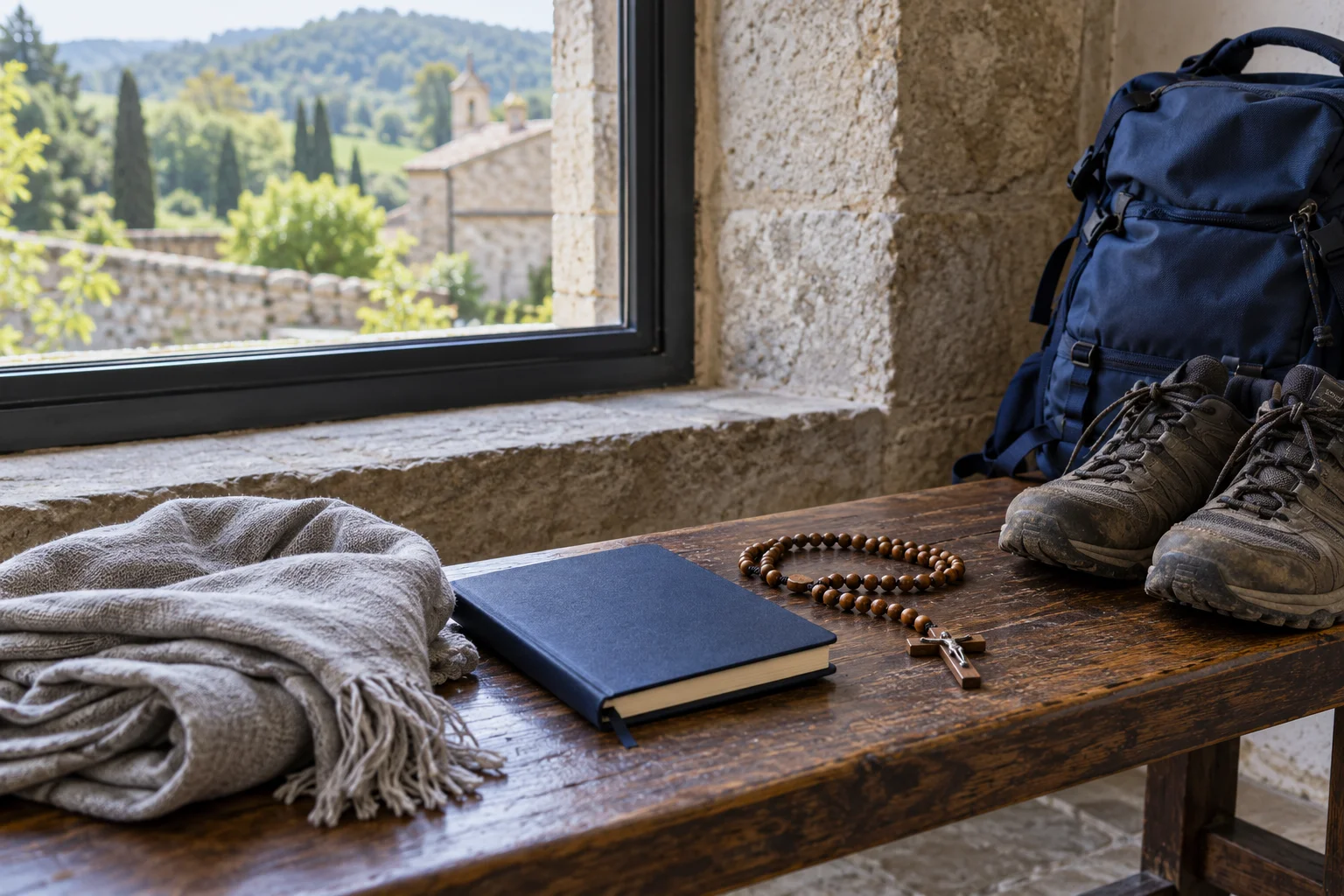
Mass anchors the day. Priest-led groups celebrate Mass at a different church most mornings, which means being at the door before the public arrives; at St. Peter's that means passing the Italian State Police security checkpoint first. Guides then take the group through the site with a local licensed guide where the law requires one. Lunch is usually free time. Afternoons are a second site or, at the Marian shrines, time at the grotto, the baths, or the Chapel of the Apparitions. Evenings vary: the candlelight procession at Lourdes and Fátima, the parish evening program at Medjugorje, or nothing at all.
On walking, the honest answer is that a city pilgrimage involves more steps than most people expect, on cobblestones and stairs, and the existing guide on how much walking is involved gives figures by destination. Rome is the most demanding city because the basilicas are spread out; Jerusalem's Old City is stepped and sloped but compact; Lourdes is flat and built for sick pilgrims, with the sanctuary's own services for the disabled; Medjugorje's village is flat but Apparition Hill and Cross Mountain are rocky climbs that no one is obliged to make, and the existing page on whether you have to climb the hills covers alternatives.
Only the Camino makes walking the pilgrimage itself. Everywhere else, a coach, a slower sub-group, or a seat in the church while the others tour is a normal accommodation, and operators should say in writing which days can be shortened.