
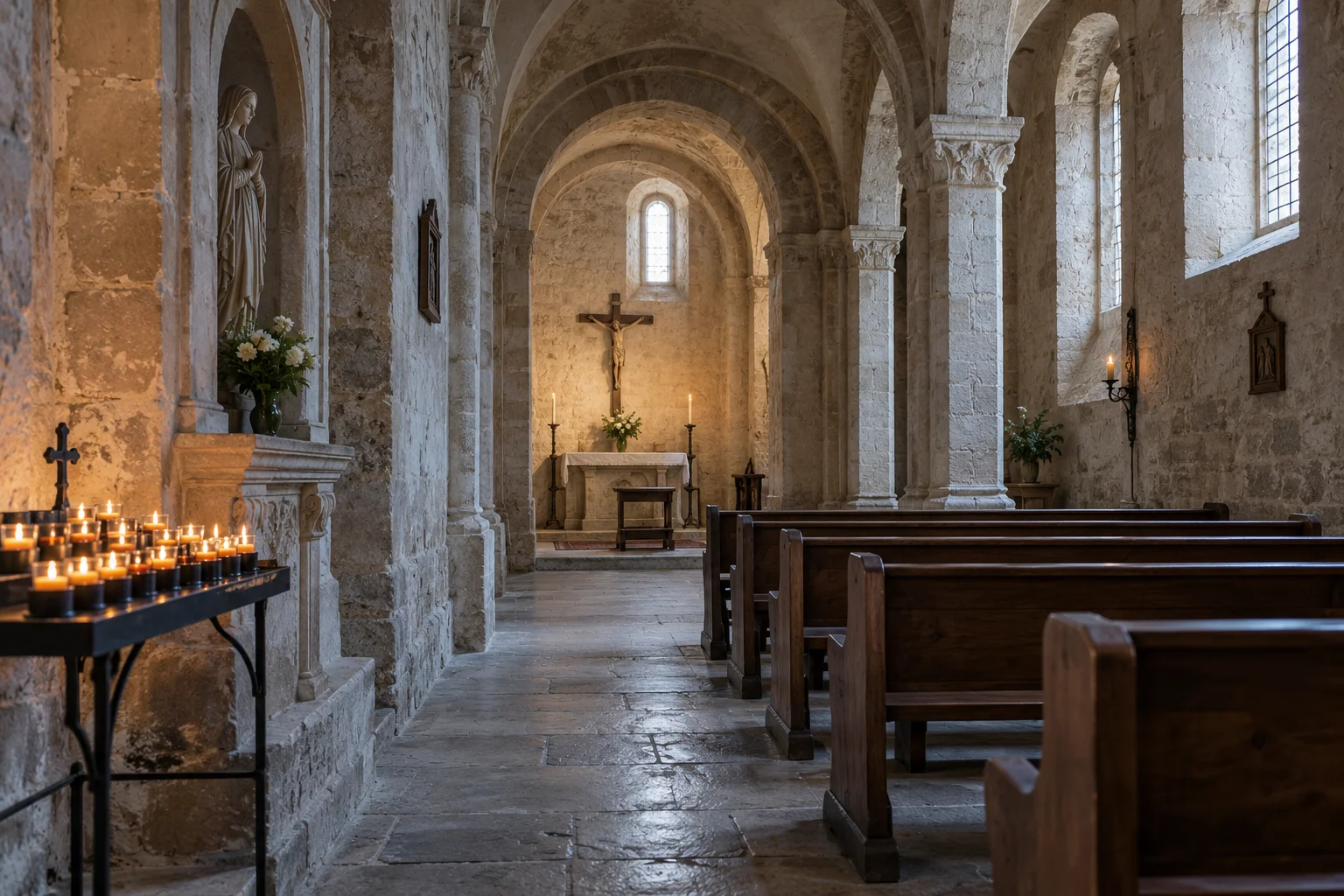
Lourdes. The sanctuary's whole organization answers the request Mary made to Bernadette to come in procession and to drink and wash at the spring. The official site lists the gestures pilgrims make: lighting a candle, drinking and washing at the water, and the Path of Grace, and it runs a reception for disabled persons and health services for sick pilgrims in the hotels. People go to pray for the sick, to serve the sick as volunteers, or because they are sick, and healing is asked for without being promised. The existing page on why Catholics go to Lourdes covers the apparitions and the baths.
Rome. The Vatican's own page on the papal basilicas lists St. Peter's, St. Mary Major, St. John Lateran, and St. Paul Outside the Walls, and the original Holy Year consisted of a pilgrimage to the basilicas of St. Peter and St. Paul. Catholics go to pray at the Apostles' tombs and to see the Pope at the Wednesday audience; the draw is unity rather than apparition.
Jerusalem. The U.S. bishops' guidelines call a Holy Land pilgrimage "a journey of prayer" in the land where Jesus lived, and say it is "made complete by encounters with the living Church" there, the local Christians who are few and often poor. As of October 5, 2026, the State Department rates Israel at Level 3, Reconsider Travel, in an advisory dated August 26, 2026, with Level 4 zones near Gaza and the northern border; conditions change, and the advisory should be read before booking.