
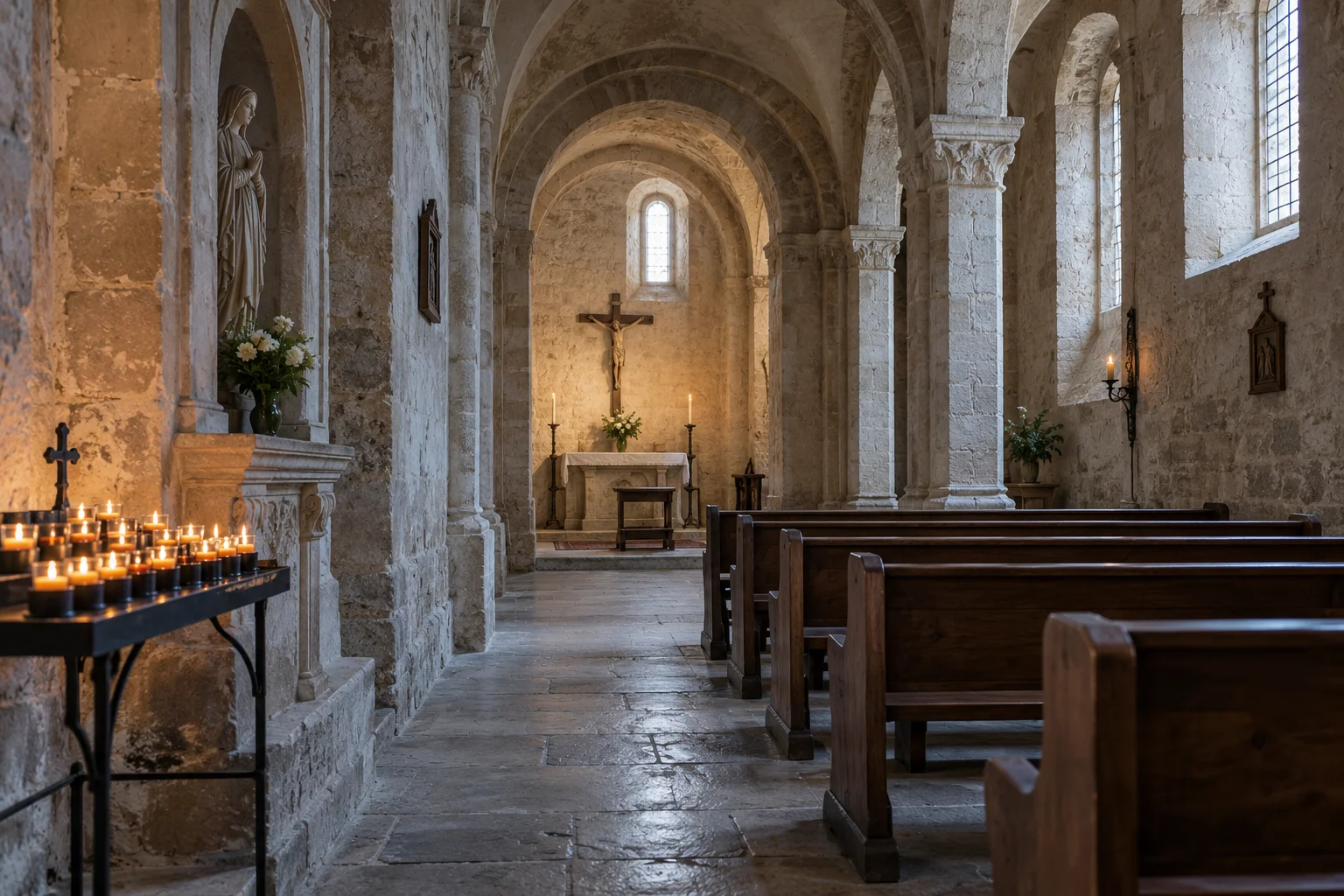
The parish pilgrimage is the most common form of Catholic pilgrimage in the United States because it answers the two questions a first-time pilgrim has: whom will I travel with, and who will say Mass. The Catechism (2691) lists pilgrimages among the guides for prayer, and a parish group makes that concrete with a familiar priest and familiar faces. Canon 1234 asks that shrines supply preaching, Mass, and confession more abundantly, and a priest traveling with the group can celebrate Mass at the shrine's altars by arrangement; the shrine of Fátima, for example, asks organizers to register the group with the name of its priest or spiritual guide and offers to schedule Masses, adoration, and reconciliation for it.
The priest's role is spiritual, not logistical. He chooses readings and themes for the trip, leads the rosary on the coach, offers confession in the evenings, and decides how much silence the group keeps at a site. The company's representative or a local guide handles tickets, headsets, meals, and timing, and should never be the one leading prayer. The existing pages on how a priest-led pilgrimage works, on how many people are needed, and on whether the priest travels free cover the mechanics.
Parishioners who join should expect daily Mass, a group rosary, and a pace set by the slowest walkers if the priest insists on it. Non-parishioners and non-Catholics may usually join if space allows. A parish that cannot fill a group on its own often combines with a neighboring parish or the diocese.