
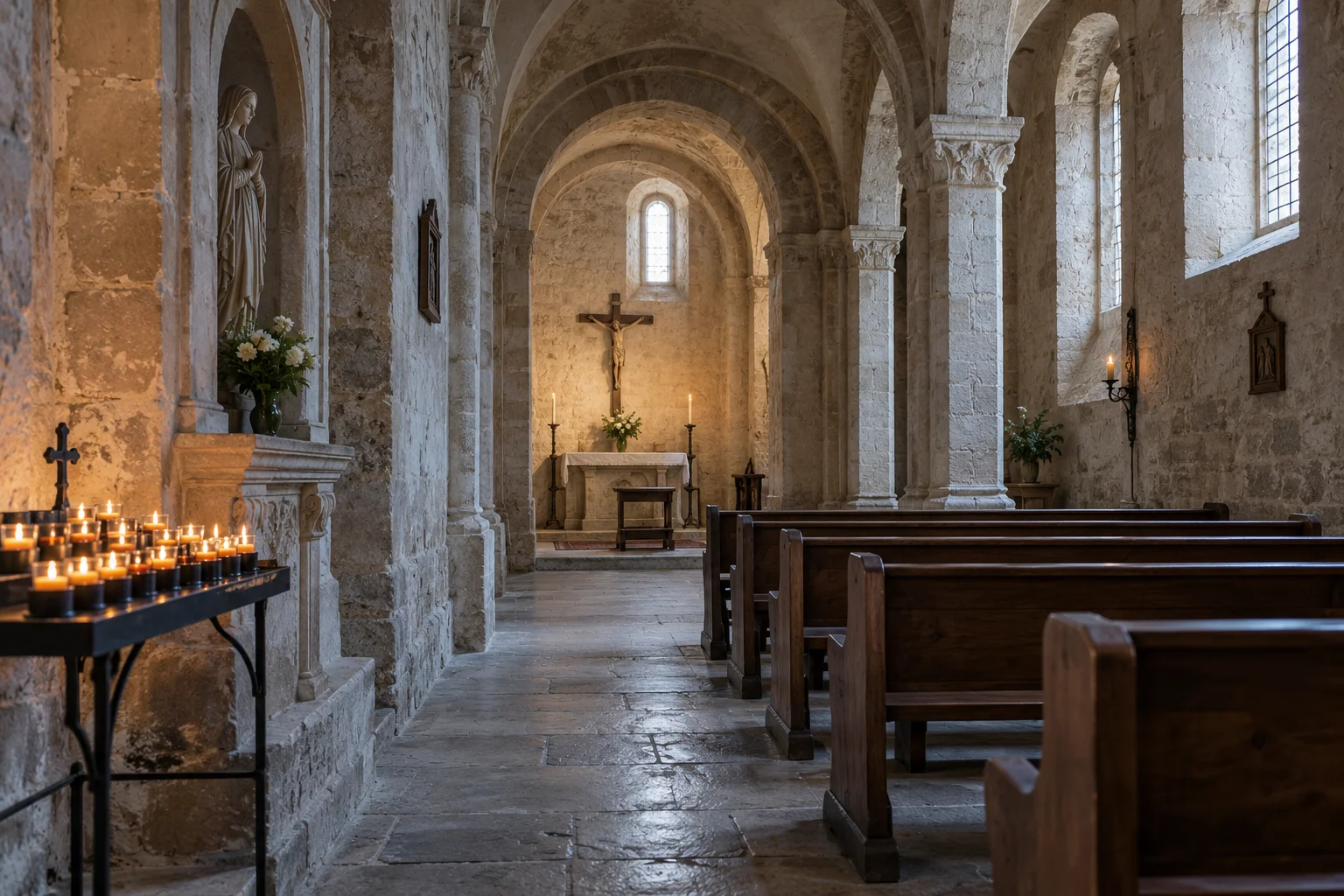
The Church has never required pilgrimage, which is why the Catechism lists it among the "guides for prayer" alongside the saints, the family, and spiritual direction rather than among obligations. The existing page on why Catholics go on pilgrimage covers the motives people bring; this page is about what the practice is for. Three things set a pilgrimage apart from a tour of the same cities. First, it is organized around the sacraments: Mass is celebrated most days, and confession is available at every major shrine. Second, it carries an intention, whether a prayer for a sick relative, thanksgiving, or a decision to be made. Third, it accepts some discomfort, from early starts to long walks, as part of the prayer rather than a failure of planning.
The Jubilee site traces the word to the Latin per ager, "across the fields," and notes that "when we travel, we do not only change place physically, but we also change ourselves." That is the test of a pilgrimage: whether the traveler comes home more attentive to God, not whether every site was seen.
In practice the difference shows up in the itinerary. A pilgrimage to Rome schedules Mass at St. Peter's or one of the other papal basilicas, time at the tombs of the Apostles, and the Wednesday general audience; a tour of Rome schedules the same buildings as architecture. Both can be good; only one is a pilgrimage. Pilgrims who are not Catholic are welcome, and the existing page on whether you have to be Catholic covers that question.