
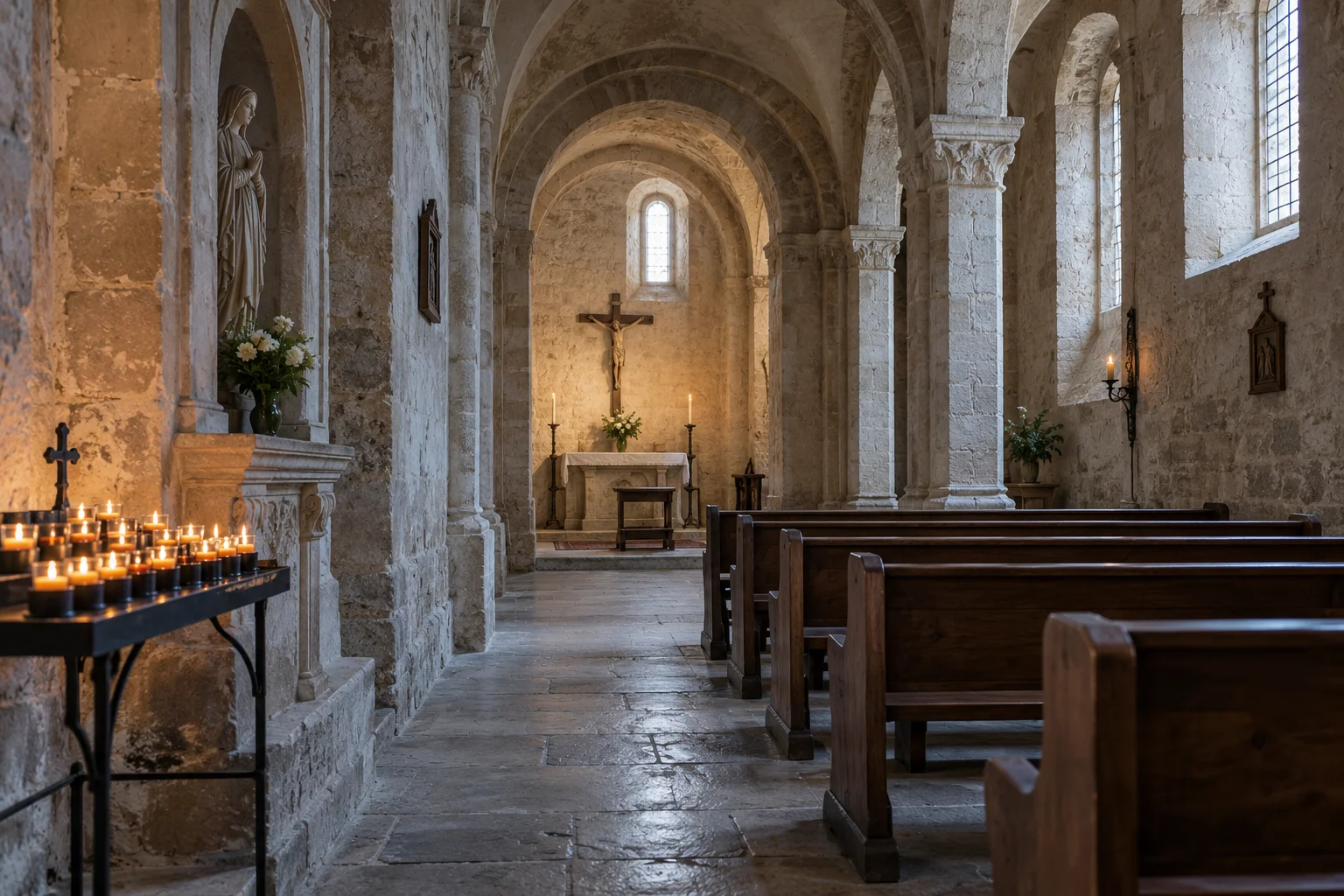
Mass is public worship and no one is checked at the door. The USCCB guidelines, printed in many missalettes, welcome other Christians "as our brothers and sisters" and welcome "those who do not share our faith in Jesus Christ," asking them to pray for peace and unity. A non-Catholic may sit, stand, and kneel with the congregation or remain seated, and may come forward at Communion with arms crossed for a blessing where that custom exists, or simply stay in the pew. The existing page on non-Catholics attending Mass has the practical detail.
Communion follows canon 844. Catholic ministers give the sacraments to Catholics; members of the Orthodox churches may receive if they ask on their own and are properly disposed; other Christians may receive only in danger of death or grave necessity as judged by the bishop, which does not arise on a pilgrimage. Canon 842 adds that an unbaptized person cannot validly receive any other sacrament. The existing page on non-Catholics receiving Communion covers this in full.
Confession, under canons 959 and 991, is for members of the Christian faithful, meaning Catholics, who are free to confess to any approved priest. A non-Catholic who wants to talk with a priest about a burden will find priests at every shrine willing to listen and to pray; what they cannot give is sacramental absolution. Visiting the Vatican requires nothing but the dress code, and the rosary is a prayer anyone may say.