
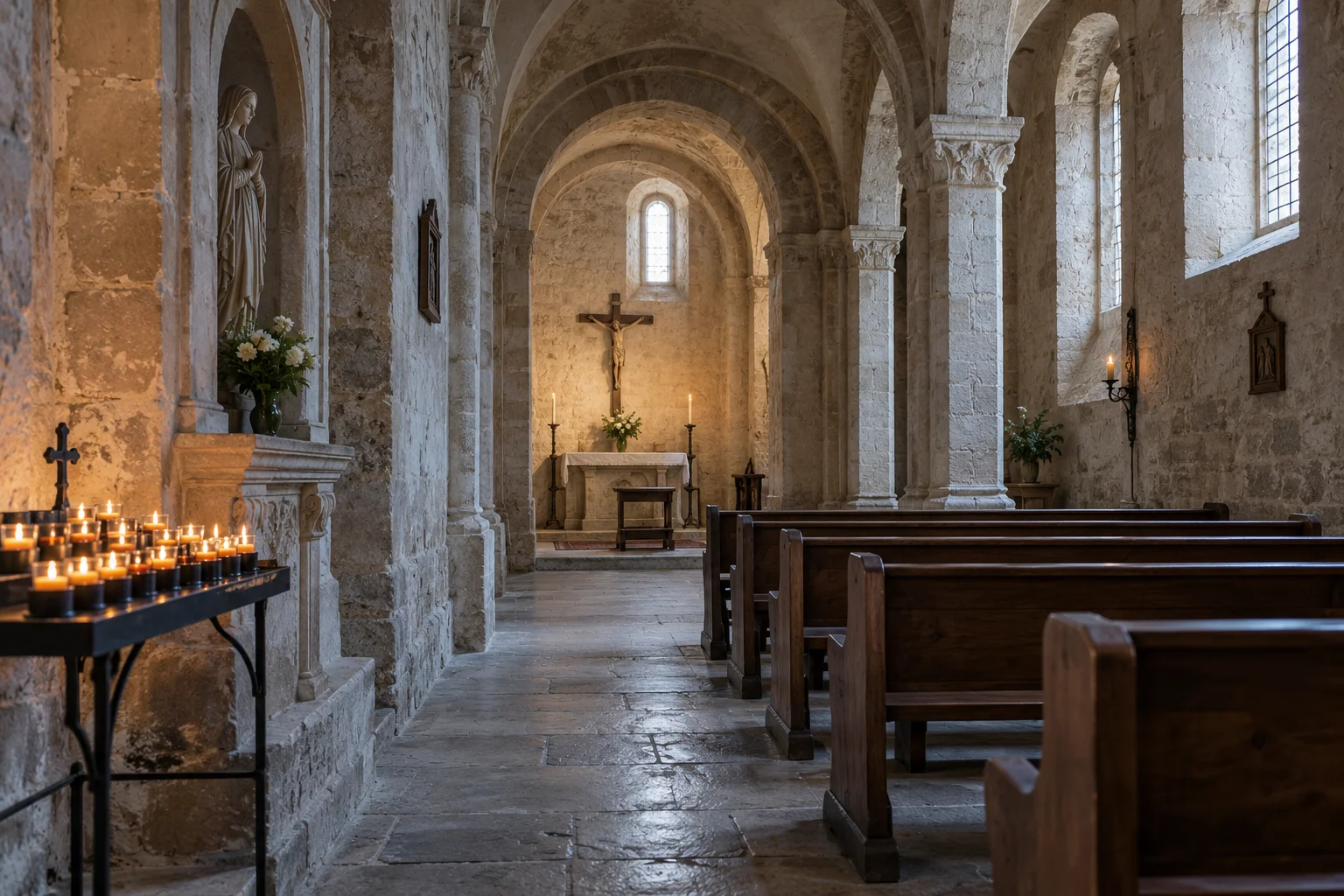
The Catholic Church's own teaching makes the welcome natural. The Catechism (818) says that those baptized in other Christian communities "have a right to be called Christians" and are accepted as brothers by Catholics, and (819) that "many elements of sanctification and of truth" are found outside the visible bounds of the Catholic Church. The U.S. bishops' ecumenical office describes practical cooperation with Evangelicals and Orthodox and a shared day of prayer each September. None of this changes the rule on Communion, which Protestants on a Catholic pilgrimage do not receive; the existing page on whether a Protestant can go to Lourdes explains how that works in practice.
In the Holy Land, Protestant and Catholic groups visit most of the same places: Nazareth, the Sea of Galilee, Bethlehem, the Mount of Olives, the Holy Sepulchre. Two sites differ. Catholics and Orthodox hold that Christ was buried and rose at the Holy Sepulchre; many Protestant groups also visit the Garden Tomb outside the Damascus Gate, a nineteenth-century identification that the Catholic Church does not accept as the site.
At Lourdes, the sanctuary receives pilgrims of every background and the volunteer services do not ask about denomination. On the Camino, the Pilgrim Office issues the Compostela to anyone who walks the minimum distance for a religious or spiritual reason, which includes Protestants. A Protestant joining a Catholic group should expect daily Mass and the rosary and will be welcome at both without being asked to do anything against conscience.